By Jim Alderson-Smith, Managing Director, Industry Coverage, Crux
Clean energy project finance in 2025 was defined by both uncertainty — spurring a flight to quality — and resilience. Even amid a volatile policy environment, shifting capital markets, and new compliance requirements, developers and manufacturers still deployed more capital than ever before. In our new report, The State of Clean Energy Finance: 2025 Market Intelligence Report, Crux estimates that total lending to clean power, fuels, and manufacturing projects reached approximately $120 billion, up nearly 6% year over year. Tax credit monetization across tax equity, preferred equity, and transfers topped $63 billion, a 27% increase from 2024.
These are strong headline numbers. But headlines don't capture what it actually felt like to finance projects in 2025 — or what the data tells us about how to position for 2026. I wanted to share my takeaways from the report and how I’m thinking about project finance in the year ahead.
, which are subject to FEOC requirements. The rest are waiting for clearer guidance from the Internal Revenue Service (IRS), particularly on the ownership test.
In the transfer market, tech-neutral §48E credits are already pricing $0.01–0.02 below legacy §48 credits for similar projects. This discount reflects not just FEOC uncertainty but also the broader reality that legacy credits carry less compliance risk and more established market infrastructure.
For developers, it’s critical to note that equipment-sourcing decisions, supply chain documentation, and ability to demonstrate compliance with interim prohibited foreign entity guidance is now directly tied to cost of capital and speed to close. Developers need to engage their legal and tax advisors now, start mapping their supply chains, and build their compliance packages.
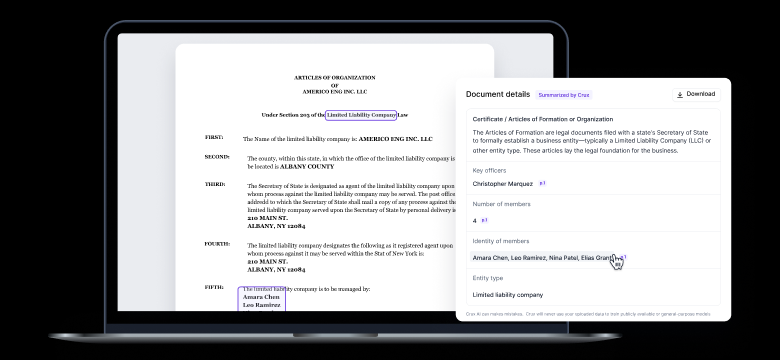
Manufacturers need to pay particular attention to how FEOC rules interact with §45X advanced manufacturing tax credits. Starting in 2026, manufacturers must meet material assistance cost ratio (MACR) thresholds that vary by component type — 50% for solar and inverters, 60% for batteries, and 85% for wind — and tighten annually. The manufacturers best positioned to capture the pricing upside we expect to see in 2026 will be those who can present buyers with a clean FEOC compliance package, including MACR calculations, supplier certifications, and clear documentation of their certification pathway.
In a market like we’re anticipating in early 2026 where buyers are competing for a finite supply of tax credits and pricing for premium §45X credits could rebound above first-half 2025 levels, the ability to reduce friction for buyers in the diligence process isn’t just a compliance requirement — it’s also a path to streamlined execution and better deal outcomes.
That advantage extends to lending, as well. Lenders are increasingly incorporating FEOC compliance into their underwriting for manufacturing facilities, and manufacturers who can demonstrate compliance upfront are better positioned to access capital on favorable terms. In an environment where cost of capital is already a key differentiator, having FEOC documentation ready before you go to market can meaningfully affect the success and economics of a capital raise.
Read more: Survey of FEOC readiness among clean energy developers and manufacturers
Looking ahead
The patterns from 2025 point to a 2026 defined by continued growth but sharper differentiation. Crux's base case projects total capex rising 7.5% year over year to $125 billion, with an upside scenario exceeding $150 billion driven by accelerated solar and storage deployment.
The developers and manufacturers best positioned for 2026 will be those that treat capital strategy as a core competency, not an afterthought. That means understanding how to optimize options across the full stack: where bridge lending fits, how hybrid tax equity is changing capital structures, which tax credit strategies align with your timeline, and how to navigate FEOC compliance without losing momentum.
These are the conversations Crux has with developers and manufacturers every day. If you'd like to discuss how any of these dynamics apply to your portfolio, reach out to our team.
Read the full 2025 Market Intelligence Report here.



.svg)

.svg)
.svg)



















.avif)