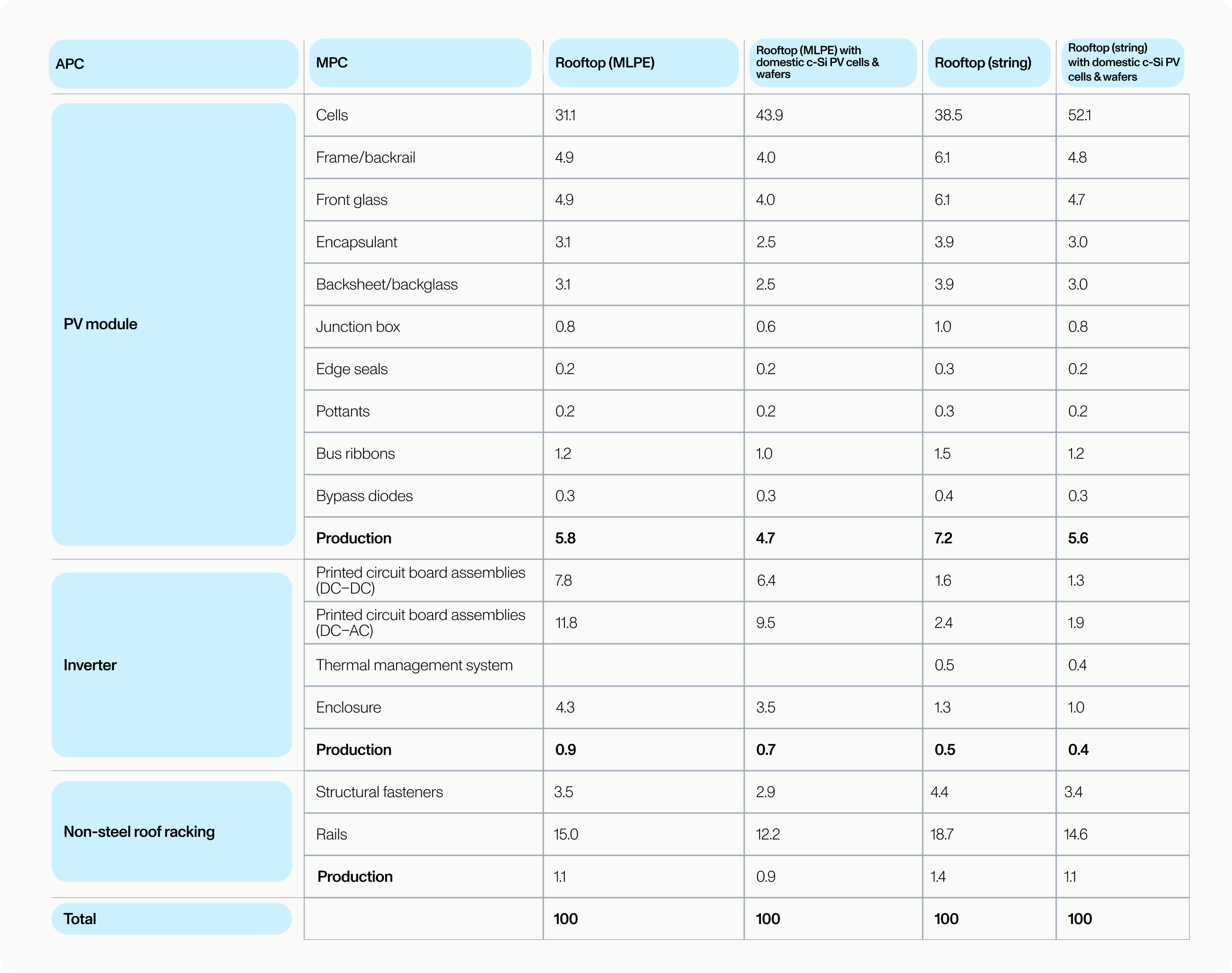
All right. Thank you, everyone, for joining us today. I apologize for a slow start. We're working on a little bit of technical stuff on our end, but I think we are all set and ready to go. I am Katie Bays. I'm the director of research here at Crux. Crux is the capital markets technology platform, which is changing the way that clean energy and manufacturing projects are financed in the US. Today, we are going to be talking about the interim guidance that Treasury and IRS released last week related to the prohibited foreign entity or PFE rules that are in the One Big Beautiful Bill Act, also called by many of us, I think, the Foreign Entity of Concern or FIOC rules after that initial framework in the Inflation Reduction Act. Quickly, before we get into the content, a couple of very fast housekeeping items. This webinar is being recorded, and we will be sharing it with all the attendees after the call. If you have any questions, you can submit them through a q and a window. We will try to reserve a few minutes at the end of the call to answer as many as possible. Anything that we don't get to, you're welcome to follow-up with us at Crux by contacting your representative from Crux. This event is off the record and closed to any members of the media. So with that, I am pleased to introduce our panelists. I'm joined today by my colleague, Hasan. Hasan is head of policy here at Crux, where he leads our engagement on federal climate and clean energy policy. Prior to joining Crux, Hasan spent nine years at Tesla, where he directed everything ranging from EV tax credits and clean energy deployment to, autonomous vehicle policy, critical mineral supply chains. He also served as a senior adviser to the US Department of Energy and began his career as a nonprofit climate advocate. Also very excited to be joined today by Elizabeth, a partner at Holland and Knight in the Portland office specializing in tax and renewables. Elizabeth advises clients on a range of US federal income tax matters, including the ITC for renewable energy and renewable natural gas, production tax credits for renewable energy, hydrogen, SAF, and clean fuels, and carbon capture and sequestration. In addition to all that, she provides tax counseling for tax equity investments and the acquisitions and dispositions of projects and platforms. Elizabeth was an attorney at an international law firm in its Portland office prior to joining Holland and Knight. I'm very pleased to have Josh Morris with us, from Novogradac. He's a partner in the Dover, Ohio office, where he provides accounting, tax, and advisory services on the full life cycle of renewable energy projects, including structuring, financing, and ongoing compliance of projects qualifying for federal and state tax initiatives. His work spans renewable energy, ITC, PTC, and other related monetization structures with particular emphasis on emerging requirements, market considerations tied to domestic manufacturing, sourcing, and supply chain alignment. A significant focus of Josh's practice is assisting clients with their FEOC or FEOC concerns and domestic content compliance and planning. So we thought we would take a few minutes at the beginning of this webinar before we bring our panel up to just talk through a quick overview of the interim guidance published by Treasury in notice twenty twenty six-fifteen. So this notice was published on February twelfth. The guidance relates to the material assistance requirements, particularly for sections 45Y, 48E, and 45X tax credits. Folks on the line will probably know that the FIOC rules took effect as of January first of this year. The guidance says a variety of of different things, but it is principally focused on the material assistance rules, which we'll call MACRS here on from this point forward. It indicates that there will be future rulemaking, that future rulemaking will address some of the other major questions of, PHEOC, including material assistance or excuse me, including, effective control rules and the ownership test for projects. All three of those tests have gone into effect as of the beginning of this year, but we have not yet received guidance on on that full suite of compliance requirements. With that, we started to try to put together a bit of a construction of when the PFE rules impact and disqualify potentially projects from claiming either the 45Y or the 48E tax credits or the 45X tax credit if they include material assistance from a PFE. So we will provide the slides to folks afterwards, but I wanted to flash this up on the screen. There are a variety of different requirements that, kick in based upon when a technology or project, achieved beginning of construction or whether the tax credit is itself a, twenty twenty five or twenty twenty six or later vintage year tax credit. Under the material assistance rules, MACRS is essentially a formula that is designed to calculate a minimum threshold of how much of a project's or a component's relevant cost is non PFE relative to its total cost. And if a project's material assistance requirement is below the applicable threshold, then that facility storage or eligible component is considered as having received material assistance from PFE and, therefore, is not eligible to generate a tax credit. So those thresholds vary based upon different technologies and timing, but they generally increase over time. And last thing that I think we'll just cover very quickly here, and I think, you know, fortunately, we have wonderful experts on the call who I think will add significantly more context around some of these items, but there are a number of safe harbors that the IRS has put forward. And so the key question that that interim guidance tries to solve is how deep do we have to trace the manufactured products and components up the supply chain? And the good news is that for a lot of projects, taxpayers can rely on one or more of these safe harbors to avoid tracking the provenance of every individual component that is used in either their manufactured product or in their facility. So first, under the identification safe harbor, any technology that is listed in the existing domestic content safe harbor tables published by IRS can use those tables as an exclusive and exhaustive list of what you need to track for safe harbor purposes. If a component is not on that list, then you can disregard it for the purpose of the MACR safe harbor calculation. Taxpayers then can use one of the two other safe harbors to calculate their MACR. Under the cost percentage safe harbor, taxpayers use the assigned cost percentages in the safe harbor tables as a proxy for direct costs, and they use that value to calculate the MACR. Alternatively, taxpayers can use the certification safe harbor, which relies on a supplier certification attesting the amount of total direct material costs that were not produced or manufactured by a PFE, and then use those values to calculate the MACR. Taxpayers using this safe harbor need to attach that certification to their tax forms, and both taxpayers and suppliers need to retain those certifications for at least six years. So notice also imposes significant penalties for inaccurate certifications. For any technology that does not have a safe harbor table, so nuclear, fuel cells, or geothermal, they cannot really use the identification or cost percentage safe harbors, but they can still use the certification safe harbor. So facilities that add new production to existing facilities under the incremental production rule also cannot use the cost percentage safe harbor. And while 45X eligible components are able to use the identification safe harbor and cost percentage safe harbor, there are a limited number of listed eligible or named components. So six types of inverters, solar modules, battery modules using battery cells. And the interim guidance also provides some flexibility in how taxpayers can track individual components. Under the de minimis assignment based tracking, for instance, taxpayers can assign manufactured products and components of the same type to any facility placed in service during the same taxable year as long as that represents less than ten percent of the direct costs of each facility. There are a variety of other components, elements, nuances here. For instance, interconnection property under section 48E requires its own macro calculation. If that interconnection property fails the macro test, then the taxpayer could still claim the 48E tax credit for the underlying facility. But if the entire facility fails the test, then, of course, they cannot recover a tax credit for the interconnection property alone. So with all that said, the notice is currently open for comment, provides reliance windows that will extend beyond sixty days after publication of formal guidance, which would be forthcoming later this year, we presume. O triple B also requires the treasury to issue final guidance on material assistance, including safe harbor tables by the end of this year. So that was a lot. We are going to close our slide deck and bring up our panel. So everyone who is able can turn on their camera. I wanna thank you all for sitting through that long winded explanation. And now we get to get into the fun part, which is talking about what all this means for the market. So my first question is to the whole panel, Hasan, Josh, Elizabeth. First and foremost, does this guidance provide the level of certainty that we were looking for and hoping for? What does it cover and what does it leave out? Well, I'm happy to kick off if you can hear me all right. I would say it provides a meaningful amount of certainty, albeit on a specific set of issues. And I think ultimately this notice is essentially treasury saying, we're gonna give you the formula, now, and we're gonna give you more details around the numerator later. Okay. So I would bucket what we have into three categories, supply chain tracing, supplier certifications, and compliance flexibility. And I think on the supply chain tracing side, this is the biggest unlock. I think that before the notice, there was significant question about whether or not the rules would go all the way upstream deep into the supply chain, and the answer here is clearly no. For technologies with existing safe harbor tables for the purposes of domestic content calculations as you alluded to, the notice repurposes those tables as the exclusive and exhaustive list of components relevant to the macro calculation, so for solar, wind, battery storage. If it's not on the table, it's disregarded. Obviously, have experience with this through the domestic content table, convention that's being utilized here. So that's a huge practical simplifier for those industries. You're doing diligence on a bounded set of components from your tier one suppliers and not trying to, say, trace silicon wafers back to a mine. I think, obviously, for the technology without existing safe harbor tables, nuclear, geothermal, others, There's still open questions, about how the components universe gets defined, but, you know, as you see in in the notice, treasury has promised further guidance there, in later this year. But I think the important signal from the notice is that the dominant framework across the market is tier one supplier accountability, and I think that is a good signal on trajectory of where things will go. So I think the compliance question here is that who touched this material three supply chain layers ago, it's can you direct supplier certify that they're not PFEs, that their manufactured inputs aren't either. I think that's a manageable diligence ask and the standard buyers and investors should be underwriting too across the board. Couple other things I would just say, the supplier certifications piece, again, I think those are three workable pathways. And again, to your point on compliance flexibility, I think the tracking and averaging tools are useful. As to what it doesn't cover, obviously, the big gap is the who exactly is a PFE. And and I would say while figuring out a PFE in the first place remains a bit of an open question, I would take the opportunity to plug Crux's December twenty twenty five survey of developers regarding FEOC pre compliance, which showed an overwhelming majority of developers are doing the work to get ahead of the foreign influence entity and the specified foreign entity tests, which together comprise what a prohibited foreign entity is. And rather than speculate on where developers actually stand on the ownership question, we have data. Over ninety percent of companies have initiated ownership reviews, contract audits, supply chain mapping. The SFE and FAE ownership picture is increasingly clean. Eighty percent of respondents had no ownership at all. And certainly, we have significant ample evidence that contracts are being derisked and of those that are at risk, those terms are being renegotiated actively. So I think while the OBB or the OB three introduced real complexity, the market's proactive posture combined with macro details in hand, hopefully, is a green light to market participants. Great. Thank you. Josh, I know you all have done a ton of work in this area. How does this reconcile with your expectations and sort of what you were looking for from interim guidance. Doctor. Sure. Yeah, I think I share similar positivity as Hasan. And I know that's not a universal view. Practitioners, they voice frustration that it was only maker focused and math focused. I'm an accountant, you know, I love math. So for me, the the fact that the maker calculation has now fully been operationalized, I think that's a big win. The clarity on how the domestic content safe harbor tables carry over as the identification safe harbor is exactly the kind of practical and workable framework that lets us actually build a compliance package for clients. And importantly, you know, I think the guidance should help fall out what has noticeably been a frozen tax equity market, projects with clear supply chain mapping, strong manufacturer search, they'll now have more of a defined path proceed under the safe harbor approaches, assemble a package that developers, tax equity investors and transferability buyers can actually, you know, perform real due diligence on. You know, and as for what's left out, sure, you know, this was explicitly the material assistance notice. So there's gaps by design, but, you know, we originally do need a PFE criteria notice. And specifically for that, you know, I'd like to see some deeper treatment on the effective control tests, the fifteen percent debt threshold clarified under the FIE criteria. I'd like to see more clarifications on the reason to know standard, some anti circumvention regulations, how recapture might apply in the context of if you have a fraudulent certification. And then and then how corporate group and indirect control structures might be treated. And those aren't small questions, they go into the threshold issues of whether, you know, that entity is a PFE or not in the first place. But with all that in mind, overall, I'm feeling positive that this new guidance will propel the industry to make FEOC compliant projects bankable. I think we share that hope and enthusiasm, and I wanted to ask for really both of you, but this is kind of the third or fourth major piece of guidance that we've gotten from this IRS in the last twelve months. What does the direction of the guidance that we received tell us about sort of the overall mindset of IRS towards the regulation of the renewable energy tax credits and particularly related to PFEs? You know, if you don't mind me going first, Hasan, I think it shows that they're trying to create something workable. From what I can tell, they want to create a framework that folks can actually, know, perform due diligence on, while making sure that the goals and the spirit of the the FEOC restrictions, you know, are really put to test, right? It's not meant to be easy. It is meant to be complicated and complex. But I do think from seeing the guidance that they're rolling out with, there's a seriousness. They're not trying to slow projects down. They're trying to create a real framework that folks can, operate in. I just wish they were faster. I wish this notice came back in November. And right now we're talking about the PFE notice that should be coming later. So, you know, I I I just wish there was a little more speed, but I think they're being thorough. Yeah. Elizabeth, if we have you, I wanted to see if we'd come to you next. Anything that you wanted to call out in the guidance or overall impressions of what this suggests about the IRS's posture towards, the industry and the PFE rules? Yeah. For sure. And apologies again for all the technical on our side. I'm not really sure what's going on with our network today. At any rate, yeah, thanks very much. I think the the guidance itself, I'll I'll echo Josh's statement. Honestly, it is not bad. It really does address quite a few things pretty clearly. There are a few things that we're still kinda chewing on a little bit. But generally speaking, lots of administrability, lots of ability to actually make supply chain work, lots of ability to actually make financing work. We've got, whereas we had a long list of questions before, now we actually have a really workable game plan from cradle to grave, all the way from component supply to financing. That's excellent. And it gets kind of into the next question, which I thought we would kind of popcorn around. I wanted to see if, you know, putting everyone on the spot, and if you had to pick out a winner and a loser from the guidance, who do you think is the big winner, and is there anybody who comes out as a little bit of a loser in the current state of affairs? I'll throw out, I think batteries did okay on us. Honestly, I think there was a lot of trepidation around how the battery industry was gonna fare under FEOC. The averaging rule that we have in 45X, I think, is gonna be a big game changer for the battery industry. That creates a lot more ability, particularly for folks who have multiple different varieties of eligible components that they sell because their supply chain's gonna inherently be slightly different for each one of those iterations, and they're gonna have pretty broad ability, I think, to actually make the numbers work now. Now, on the other side, batteries didn't suit so well on E and Y, okay? But at least if we can get that domestic supply chain to function, right, with FEOC in mind, then we ought to be able to get to a place where we can make 48E and 45Y work, generally speaking. Yeah, and kind of expanding on what Elizabeth said there, I think obvious winners, solar wind battery projects that have established domestic supply chains. I think those projects are the clear winners. Know, those developers, they've already gone through the exercise of mapping their supply chain, getting into a cadence with their suppliers around requesting sensitive sourcing information. They had to do that to substantiate domestic content. So I think it'll be a natural pivot point for PHEOC that they can ask for that as an extension of that work already. For them, it's an expansion of the existing process, not a new one. They can engage their advisors, tackle domestic content and FIAC in tandem, which will be a significant operational advantage. Losers. I think the losers are obvious here. It's technologies without safe harbor tables, right? They're genuinely in a difficult position. Think nuclear fuel cells, geothermal. There's no identification safe harbor for them to rely on to define what the MPs and NPCs are. There's no cost percentage safe harbor. They have to do the direct cost approach. Their path of substantiation is gonna be significantly harder, more expensive, and and the guidance didn't didn't give them, an easy path like solar, wind, and battery. Awesome. Would you add anything to that? Any other winners and losers to call out? You know, I think just building upon Josh's point, you know, while acknowledging kind of the irony that a a credit that was initially enacted as a tech neutral credit, in the IRA was then sort of chopped up by technology specificity in in o b three. My hope here is that there's a more uniform approach ultimately applied across all technologies. And I think the fact that the domestic content tables were indeed repurposed for baseline credit qualification for solar, wind, and batteries is hopefully a very good sign that there will be a consistent approach applied for what have generally been acknowledged as the preferred technologies of, the White House position if it's nuclear and geothermal or fuel cells. So, obviously, an interim period of uncertainty, where you're kind of without a a a really, you know, important safe harbor that other technologies are is tough, especially when you're already again in compliance period. But I think it's a helpful signal that, we will get those, and they will be also, similarly, useful and and provide a clear rule of the road for all technology by the end of the year. Great. Elizabeth, I wanted to direct one more to you. Just looking at the interim guidance in the context of contract negotiations, whether it's a transfer agreement or a tax equity partnership structure Do you see any sort of obvious near term changes to those negotiations as a result of the guidance that we've received, and how how do you see that working? I mean, yes and no. Right? Material assistance is starting to filter into the marketplace beyond debt right now. We're seeing it most most clearly right now in procurement agreements that are obviously preparing for tax equity or transfer ultimately. And so I think the material assistance rules that we have now, they create a lot of more certainty. But one of the struggles that we have been having over the last several months when FEOC provisions come up is how do we draft around the uncertainty? And so there's always this struggle around, well, do you really need this? And how broad does it really need to be? And what kind of skeletons are we worried are gonna fall out of this closet? So, I think that certainty provides the relative certainty that we have now, I should say. Right? Because there's still a few little open items. The relative certainty we have now makes it a lot easier to draft those procurement agreements carefully and fairly for both parties while also bearing in mind the concerns that you ultimately have when you get to the financing stage. When we get to tax equity and transfer on these deals now where material assistance matters, we have a much clearer path as far as what certifications are going to be needed. What do you need to have in your audit file? What is the counterparty gonna be most concerned about? But what we, of course, don't have is what Josh alluded to earlier. Right? We don't have clear guidance on the definitions. And so until we have that, there is still inherently going to be some trepidation, frankly, around how precise can we be on these contracts? I know what I need to do for certificates, but I still don't really know what it means to be an FIE. So Yeah. No. I know that's come up in quite a few circumstances as well, and I think let's get in maybe more into the detailed nitty gritty of of this particular guidance as well as what we are still looking for. But I guess first question for you, Josh, is just looking at kind of what developers have to do to construct their material assistance cost ratio calculation in the first place. You know, where do you expect them to experience the most friction, and what are the key in inputs to that calculation? I think that, you know, necessarily within the context of one of our solar wind storage technologies with the with the macros table. Sure. Yeah. So developers first need to work through that maker decision tree. The starting point is the supply chain mapping, not just who you buy the equipment from, but who actually is manufacturing that equipment. You know, who manufactures the MPCs down to the level detail included in the safe harbor table. It's more granular exercise than most developers have ever done before, right? They know who they buy the module from, but they might not know who's making the sell. And so then once you understand your supply chain, the next step is assessing the PFE status of the major MPs and MPCs. And then with that picture in hand, you can make some strategic decisions whether you want to go down the direct cost approach route or you want to go the safe harbor route. Most projects are going to want to pursue the safe harbor route, no doubt. And so let's assume you go the safe harbor route from there. Then the key insight is that you don't have to chase every MPC. You just need to get over that applicable threshold for solar projects that begin construction in twenty twenty six thresholds forty percent. So a practical strategy is to identify the MPCs that will get you over the threshold and focus your certification efforts there rather than trying to document every single component in the bill of materials. Right? And and then once you've identified, say, your target MPCs, you need certifications from the MP and the MPC manufacturers. And but it doesn't stop there. You then need to satisfy the reason to know criteria by performing appropriate due diligence to actually support reliance on the certs. And then we get to my favorite part, you do the math, right? And, but then the biggest friction points to your question would be the interaction with the manufacturers, getting the information needed to map the supply chains, the right depth and satisfy the reason to know standard projects are going to want more than just the cert developers, investors, their advisors. They're gonna want to understand what actually supports the PFE conclusions in those certs. That means digging into ownership information that's often proprietary or sensitive. And that's where the real friction lives. But that's how I think about it. There's a there's a decision tree, and and you gotta meticulously go through that process and and obtain information. That's really thoughtful. Yeah. Thank you for that. And, Elizabeth, do you have a sense for the different kinda safe harbor approaches and which one you anticipate that clients would would be more likely to rely upon? Yeah. Definitely. I mean, there seems to be a fairly clear path. For 45X, averaging is gonna play a huge role, particularly for those industries where you can't rely on the safe harbor, right, and you have to figure out what your individual constituent materials are. Averaging is gonna be huge. I think the certificate approach, right, the way we're reading the notice, it looks like we can actually accept certificates that use direct cost for the most part because the certificate, if think about it, has to go all the way through the chain of the hands, all the hands to financing. So at the end of the day, it's the taxpayer's direct cost. And so most important is gonna be a percentage allocation between PFE and non PFE materials. And so I think that's gonna provide a lot of ease, it's gonna make the process more seamless. But I would echo Josh's note that, you can't Look, the statute says you can rely on a certificate, but can you really Do you really wanna walk into a transaction where you don't really know anything about the manufacturers? That's not my comfort level. So the process, I think, is gonna be very much how Josh mentioned. We're gonna be relying on accounting firms like Novo again. We're gonna be having to write opinions again. There's going to be some diligence that's going to have to get done. We're all gonna have to tackle that process of NDAs or lawyer to lawyer share or something like that in order to make this work. But I think the point is, to answer your question, Katie, because there are fairly clear paths with perhaps the direct cost certification, with perhaps averaging on 45X, with perhaps ignoring certain things using the allocation method for 4080 and 45Y, instead of having to individually track. We're going to be able to get, in a matter of, I think, a few months even, we're going to get procedures in place that are gonna work relatively well for most processes. And that's key because we need to be able to execute these transactions quickly, efficiently, cost in mind, and with confidence that we're getting the right answer. Yeah. And I know in particular that speed has been such a big pressure point. We've heard about that from a lot of our law firm partners that you are just being pushed and pushed and pushed to turn that analysis more and more quickly. So particularly interested in Josh, I'd also like to hear from you, Elizabeth, but, like, how do you do that in a way that allows you to manage the risk or limit risk while also responding to the enormous pressure on your time to try to get these deals. Obviously, we have our July fourth, twenty twenty six start construction safe harbor that is going to be expiring for solar and wind. So how do you kind of respond to that time pressure and also limit the risk of, you know, something flipping past? I know I can speak for myself here and Elizabeth will probably feel the same way. We're gonna be thorough no matter what, no matter what the time pressures are. And with that in mind, you wanna reach out to your third party advisors early now and get in their queue. Know, don't wait. Yes, please. Right. It's amazing how many folks are reaching out to us about this already. If you're waiting, you're it's it's you might not get fast responsiveness because we're gonna be thorough no matter what the pressures are, what the time frame is. We're gonna be commercial and try to work as quickly as we can. But you know, it's that reason to know criteria. And so I keep kind of going back to that. But the certification safe harbor, it's significantly shifted the risk to suppliers and manufacturers. With that certification, they have to make that under penalties of perjury. And that helps. But it doesn't entirely shift the risk away from developers and investors. It doesn't put them off the hook. So with that whole process, we're helpful with the due diligence. And we're taking a trust but verify approach with our clients. Trust the certs, but you've got to verify it. You've got to do your homework. You can't trust it blindly. And so to your original question, Katie, we're gonna be all moving fast. We're gonna have a lot of sleepless nights to keep up with the volume, but get in the queue early. Yeah. And I think I'd also echo too, having a good process management in place is really key. I mean, we've been writing these opinions for and construction people for eight seven months now. And so we've put together a diligence procedure. We actually had a meeting internally earlier today talking about refining it to make it work better, trying to come up with a specific approach to how we are going to conduct diligence exercises and how we are going to draft opinions and things like this on point. There are certain things that it makes sense to do. Like for lawyers, we can look at everybody's org structures. That's fine. We can figure that out. Easy peasy. For other things, it's never going to make sense to fully diligence, right? Effective controlling contracts. A counterparty would be crazy to turn over all of their contracts. They're never going to do that. And so at a certain point, you're gonna have to say, all right, well, give me a sample or two, I'll look at those. And then I'm gonna have to get a certificate. I'm gonna have to get a rep of some sort. And so that process, the key is making sure that not only can you manage it efficiently, which again, refinement, but also that it is robust enough. It has integrity so that the things that it makes sense to diligence, do a deep dive on are getting done. And so that at the end of the day, the work product can survive the rigors of financing and preferably also survive the rigors of an audit. Yeah. I mean, I think this is good really good guidance. Right? Because this the point is this is complicated and that it's where it's necessary to do it well, so productivity is key. And yeah, you know. If I can say one more thing too, Elizabeth, you kind of jogged my memory that, a risk based approach is important. Like you said, with effective control, you want to dig in. You'd love to look at every counterparty arrangement, but it's not practical. So what I'm suggesting my clients to think about is a three tier approach where the first tier you have, you know, the signed certification under penalties of perjury from the manufacturer. That's number one. You have to have that for your maker test, right? Then tier two is corroboration. You might do a questionnaire, high level supply chain map screen for the red flags that are surface level publicly available. Everybody should be doing that one too. And then tier three is more targeted diligence for high risk items. You know, the top cost drivers, components sourced from constrained geographies or supply chains with known PFE exposure. Not everything needs tier three treatment, but the items that matter the most probably do. Yeah, absolutely. Well, just in the interest of time, try to reserve a few minutes at the end for some of our audience questions, which folks can continue to drop in the q and a box. I thought I'd kinda zoom out a little bit and go look at kinda some of the big picture questions here. And, Hasan, I think first one to you, which is just where do you expect the industry feedback to be most concentrated, during the comment period? And then are there any stakeholder groups that you think might be sort of at at odds with one another in disagreement on, changes that they would perhaps seek that treasury should promote? Absolutely. So I think on the first question, I think I'd expect the heaviest comment volume in in three areas. Table coverage gaps, which we've covered, I think, pretty exhaustively. The diligence standards, I think, to Josh's point, you know, the the know or have reached to know is obviously, going to invite significant stakeholder feedback. You know, what is the level of diligence? Is it is the Google search enough? Do you need to run your full three tier process? Is it something in between? You know, what happens if intervening, facts come to bear post certification? I think these are reasonable questions that we that we'll certainly, I think, see more stakeholder, input on. And then I think, again, not a surprising but effective control. And I think in particular, you know, especially having worked in a company where where this is a a pervasive, you know, phenomenon, licensing agreements are are, you know, ubiquitous, particularly in the battery and solar, industries. So what does qualify as collective control? What is a licensing agreement? Obviously, there are also implications to tolling, which, you know, are are are open. And so I think this is gonna be a place where where folks in the affected industry are gonna ask a lot of questions. I'd say in terms of disagreement, I think one of the the broader political dynamics we've seen in the past ten years, and that's resulted in kind of the proliferation of PFE style policy arrangements has been sort of this, onshoring versus, you know, remaining offshore supply chains. And and, obviously, the PFE and the the the kind of, precursor FEOC rules had a has had a reasonable intent to ensure that US supply chain was not over a barrel, if for whatever reason there was disruption to supply chain, due to an reliance on China. But, you know, the practical effect also shapes competitive landscape between domestic producers and allied nation manufacturers that aren't Chinese manufacturers, if that's, you know, Southeast Asia, India, you know, increasingly Europe. So I think we'll continue to see domestic manufacturers advocate for stricter rules, narrower safe harbors, likely, you know, more, maybe even deeper tracing requirements due to their existing capital investments to build domestic supply chains who wanna be rewarded for that, and I think reasonably so. And then, you know, on the other hand, foreign non PFE manufacturers, developers whose source, you know, whose source abroad are are likely to argue that the statute is doing a good job of targeting prohibited foreign entities. It's a step change in the way we think about tax credits already, but it is not meant and is not intended to target foreign manufacturing broadly. And that streamlined certification pathways and reasonable reliance standards serve the same national security goals. I imagine this this this is not anything new, and this will continue to play out through kind of the implementation process. Great. I wanted to also ask for for you, Josh. Are there any outstanding questions that you still have about how IRS is going to look at the material assistance question, and what additional clarity you might still be looking for in the final rule. So you've got you've got you guys have a very thoughtful construction of how you run that test. Are there some sticky spots still that you'd like to see clearer guidance? Sure. You know, I do feel like, the guidance was, pretty clear and definitely meaningfully operationalizes the maker. So I don't want to overstate that there any uncertainty particularly, but I do have two open questions that I think stand out, which we touched on earlier. We need additional safe harbor tables. And I know they're going to do that. They have to do that by the end of the year. But if you're developing technology that isn't solar battery, when you're sitting there asking, what about me? You know, the identification and cost percentage safe harbors, they're only useful as the tables that underlie them. And so there's plenty of technologies out there that need those tables. They to do this by the end of the year. And then the second would be that reason to know standard, right. Right now that needs some standardization. There's the practitioners are making judgment calls about what a project truly needs to do beyond obtaining the certs. You're gonna have some projects, they're just gonna obtain the certs or they'll say, I didn't have a reason to know. I got the cert. But then you're gonna have other folks that really do diligence it deeply and want to make sure that they had no reason to know. Right. That the cert was fraudulent. And so there's just a wide ranging gap, think, in how people are gonna approach that. So I would say standardization of the reason to know standard would be helpful. And further on that point, I'd really like to see some explanation on how recapture might be handled. Think of a scenario where the developer did all of the things to due diligence it and they didn't have a reason to know. But still the manufacturer was fraudulent in preparing that certification. And there's no way they possibly could have known otherwise, the project. So if the credits are recaptured, what happens then? Certainly, the manufacturer is going to be in pretty big trouble with penalties, but who's bearing the risk of tax credit recapture? I don't at this moment, I don't know what that answer is. Yeah, and then last one, I think before we take some of our audience questions, I noticed that there are a ton and they're really good, so we want to reserve a few minutes for that. Elizabeth, to you, just looking at the other tests outside of the material assistance test, the ownership and effective control tests, when you're working on deals, are you finding one or the other is showing up as being the more challenging, or more difficult to address? There are a couple that have been somewhat challenging. One is unaffected control, as you say. Right? It's really the intellectual property aspect there, the licensing aspect, because licensing does show up quite a bit in the supply chain, even when it's just hard assets being sold. And usually when you ask the IP lawyer, Well, do you really need this license? They say vehemently, Yes. Right? And so we need other tools to deal with the intellectual property aspects here. I think that's still developing. I'm not sure that the solution is just to say, Well, we're not gonna sue each other, but I suppose it's better than nothing. The note in the material assistance guidance about this pretty plainly just said, yeah, we really are reading this strictly. And so it's going to continue to be an issue over the next several months, I think, about how we navigate it. There are options. They're not always that great, though. But there are a couple of simple things that treasury could do in future guidance that would make it a lot easier. We have this concept of a bonafide sale that's baked into the statute. We also have concepts of copyrighted articles and things like that elsewhere in the code that basically say this intellectual property that you think you have will relate just a tangible item. And so there are things they can do that would make it a lot easier and more practical. We'll see what happens. The other thing that we're seeing in terms of, just sort of a pressure point, is debt. Trying to classify some of these lenders is an inherently tricky business, frankly. Because not only do we have to figure out who really are the lenders, you also have to figure out who really are the borrowers. And that knowledge, that diligence is a level beyond what most people are comfortable talking about. So that's something we're still trying to handle very carefully and gently because it could be a big problem if we're not careful. Well, so with our last five minutes, I wanted to kind of go through a few of the audience questions a little bit rapid fire, so I'll sort of put you all on the spot a little bit, but if somebody else, if I don't call on somebody and you have a great answer, please don't hesitate to chime in. But the first one I thought I would just throw out is it feels a little bit like a good Hasan question because we've politically talked a lot about critical minerals and critical mineral supply chain and how much critical mineral refining capacity there is, in China in particular. And I know that was a very significant area of focus for some folks here in DC. But then looking at the guidance, how what is the punch line for how critical minerals are really being treated and recognized in the context of the material assistance test? Well, I think it's useful to go back to kind of the original conceit of the foreign India concern regime within the the inflation reduction act because as folks know, was exclusively applied to the new clean vehicle credit. And it was a two part credit that stipulated that one half of the credit can only be claimed if critical minerals were being were being procured in free trade, agreement countries, and that was a ratcheting percentage like we're seeing for the broader regime now. And so I think, you know, this is obviously a progenitor for this kind of policy making. I think in general terms, the the the recent guidance is a continuation of, especially as you contemplate constituent material inputs within 45X that they will continue to be something that are scrutinized. I think stepping back, to your point, I think it all sets up a potentially interesting, future round of policy making because even though critical minerals played a role in the clean vehicle credit, baseline qualification and had a small percentage tax credit for refining, within 45X. I could definitely foresee, especially in this era of onshore onshoring, and kind of input battery input competition. More policy making and potentially more tax policy. To really be more directly beneficial to investments in refining. And critical mineral extraction in the US. I think that's increasing where we're going. As you look at kind of the broader atmospherics on permitting. So I think there's a lot more to dig into there, but I was thinking there's, like, a really interesting setup for the for the next set of policymaking. Well and then I will take a couple more. And, Elizabeth, I wanted to direct the next one to you. And I think this is kind of a nice sort of high level context setting question. Just when you, as a as a market participant trying to follow the rules, you look at these new PFE requirements, is it appropriate to say that ultimately this is kind of like the prevailing wage and apprenticeship or PWA requirements in that it is basically a go, no go decision as to whether or not you qualify for tax credits. Like, this is a binary test. Gotta clear the hurdle. You clear it, you qualify. If you don't, you don't. Is that the right way to think about this, or what would you add to that? Yeah. Absolutely. I mean, I think the the rules themselves are sorta like the other side of the coin for domestic content in terms of their structure. But we have to remember, this is not an adder. This is even more dire than PWA. Either you meet it or you're toast. I think that's very clear. Yeah, PWA has cure opportunities, right? I don't think you have that here. No, it's important. And I think, look, at the end of the day, are we gonna make it through this? Yes, we are. We are going to be fine. The point here really needs to be that we have to, as a market, we have to get to the point where we know what we're doing with these rules. We know how to implement them. We know what the hot hotspots are. We can do the reports and the opinions and blah, blah, blah. But we also have to get to the point as market participants where people have enough clear eyed understanding of the risk that they can agree on appropriate kinds of contractual provisions around who bears the risk and what the cost of infringement really is. And I think it's important to go back and sort of rewind back to sort of early days with the beginning of construction. Beginning of construction was also pretty binary. Either you do it or you don't qualify. And as a market, we we figured out how to deal with that. There are tools. And so one thing I don't want people to be to walk away from this presentation or any presentation on this topic about is just abject fear. We're gonna figure it out. It's gonna be okay. Well, I think this is a good kind of closing question I wanted to send to you, Josh, which is I think gets to the core of what you're describing, Elizabeth, is how do we figure this out? How do we make this practical and functional? And so this question is, I think, speaks to the question of standardization, ultimately the standardization of process. But got one from a solar panel manufacturer, whose buyer is looking for the compliance certificates, of course, but also seeking the domestic content certification, so kind of those two layers of, different forms of compliance. And then they're looking for the SKU number, the SKU number, and the manufacturing processes, all this different information. So if you're a manufacturer, how do you balance those compliance needs? And maybe even bigger picture, you know, where do you see us going as an industry as an increasingly large number of projects need increasingly large amounts of information? Yeah, it's crucial for the manufacturers, number one, to understand the difference between FEOC and domestic content, right? Domestic content is where you make it. Is it made in the US? FEOC is who makes it? Ownership issues, right? And so you wanna make sure as a manufacturer, you have clear understanding of those two, number one. And then number two, you know, you wanna make sure that your certification statements are addressing both issues. You don't want to blend it and then have a statement that seems confusing. Are we talking about domestic content? Are we talking about PHYOC? What do we because you could could pass domestic content fail PHYOC. And so manufacturers need to be very clear in what they're certifying. And then and then, yeah, they need to be ready for the volume. They need to be able to respond to every one of their customers and prospective customers with, you know, these two issues and what the facts are. And then be ready to share with them additional information because they're gonna their customers gonna be asking a lot of questions, right. And and to give a plug for Novogratik, where we are helping manufacturers put together agreed upon procedure reports that do that fact finding and can be something that they hand off to their customers. So that way they don't have to reinvent the wheel every single time. You know, you can do the deep dive and update that periodically as often as you should and then hand it off. So that way you're not having to slowly deliver on every single request. You're prepared. You have your package ready to go.